
I get it. Food and storytelling are as inseparable as salt and pepper. This explains why nothing ever quite tastes as good as our memories tell us it did. But if you’ve ever found yourself trapped in the Kafkaesque theatre of a 21-course dinner where the telling holds your tasting hostage, you may understand the desire to scream. No, not just scream—I’m talking about a primal howl that drowns out the dulcet tones of a head chef reciting the epic origin story of the bread and butter that first graces your table: sacred cows and virgins in white solemnly planting wheat and hand-milking said cows in some bucolic pasture under the silvery light of a harvest moon. And that’s not even the first course. That’s the sort of over-the-top lyricism that has been known to accompany overly drawn-out dining experiences.
There is, indeed, a perilously fine line between a fanciful flight of flavours and a cacophony of pretension.
At the opposite end of that spectrum are stories told humbly, the kind that can propel one dish into the realm of something more than the sum of its parts—its experiences, the anecdotes, the familial legends that enrich every mouthful. Consider the humble Proustian madeleine. For Marcel, it wasn’t just a tasty morsel; it was a time machine. Dunked in tea, it spiralled him back to a childhood long since filed away in the attic of his mind. Now, I’m not saying your average, oversweetened, store-bought biscuit is going to catapult you into a reverie about your lost innocence. But let’s not underestimate the sheer, unadulterated power of nostalgia on the palate.
Such is the story of Mi Krop (หมี่กรอบ)—a crispy, sweetly tangy, and savoury confection inextricably linked to one family’s carefully woven lore of time and place—a Bangkokian tale of culinary craft, canals, and the Crown.
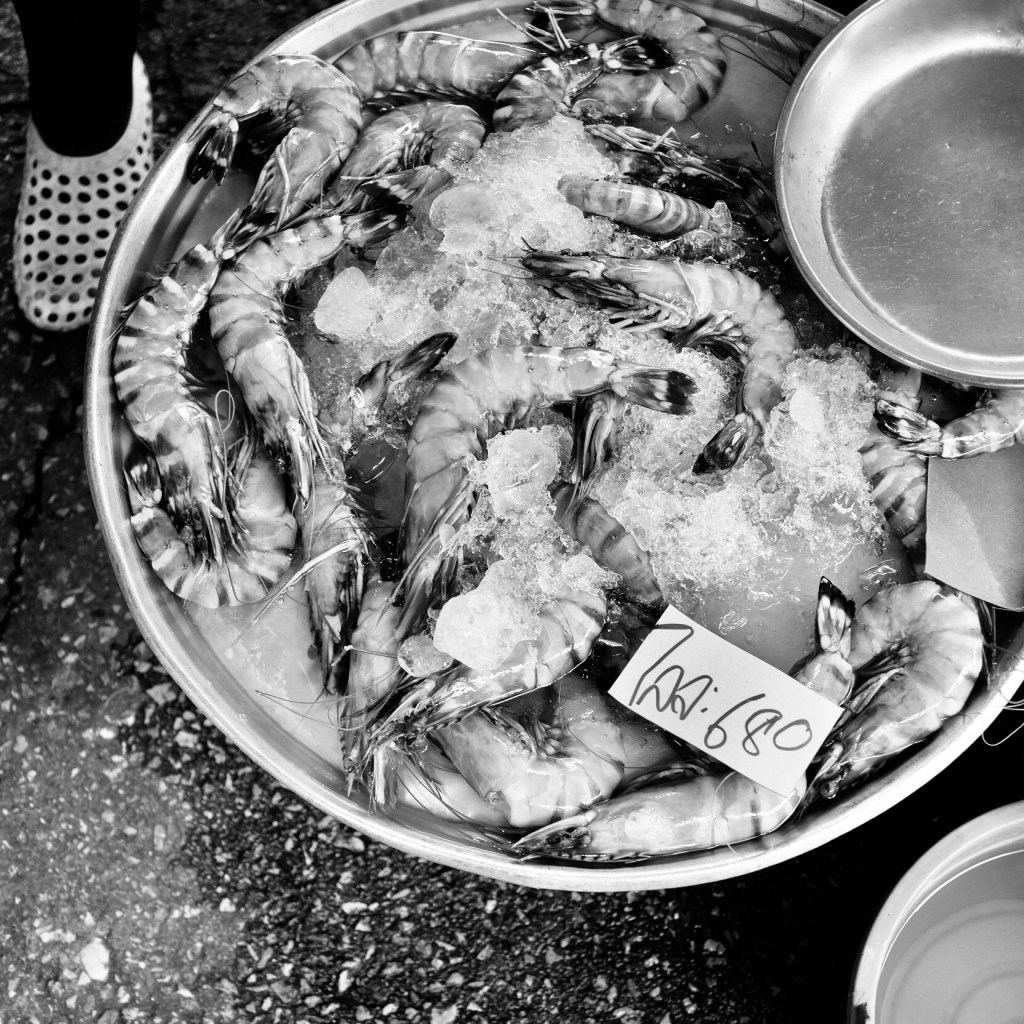
Bluntly translated, Mi Krop means “crispy noodles.” Visually, it is so much more—a jumble of rice noodles fried to a delicate crispness and coated in a syrupy glaze of tamarind and palm sugar. Scattered within this delectable nest are slivers of citrus peel, shrimp, and tofu, each piece adding its own note to the overall harmony. The dish is typically garnished with fresh garlic chives, sweet pickled garlic, bean sprouts, and trimmed banana blossoms—final flourishes that make it as much a treat for the eyes as for the taste buds.
That being said, Mi Krop also exists in a culinary limbo of sorts—sweeter than most starters and more savoury than most desserts—defying categorisation. Snack? Starter? Side? Dessert? It is its own thing entirely. Unfortunately, like many things precious and pure (and popular), it has been bastardised into a supermarket-ready, grab-and-go version, reduced to bite-sized portions that are more sugar than anything else, stripped of its freshness, and transformed into an oddly surreal Asian take on American Rice Krispies treats. Regrettably, this saccharine travesty was my first taste of Mi Krop as a child—about as far from Proust as one could imagine. It wasn’t until decades later, after moving to Bangkok, that I finally floated down the metaphorical and literal klong (canal) that led me to the fable-worthy story of Mi Krop Savoey Sawan (หมี่กรอบเสวยสวรรค์) at Tek Heng Jeen Lee (เต็กเฮงจีนหลี่), steps from the Talat Phlu Pier on Klong Bangkok Yai.
It wasn’t until decades later, after moving to Bangkok, that I finally floated down the metaphorical and literal klong (canal) that led me to the fable-worthy story of Mi Krop Savoey Sawan (หมี่กรอบเสวยสวรรค์) at Tek Heng Jeen Lee (เต็กเฮงจีนหลี่), steps from the Talat Phlu Pier on Klong Bangkok Yai.
Now let me think… fable… ah, yes. Once upon a time.
It was here, late one sweltering morning—too late to be motoring down a klong at our genteel pace, as the midday sun upped the ante and what seemed like a good idea in the morning had turned into a canal ride ten centigrades hotter than expected—less nostalgic, more Heart of Darkness. Here, a slightly groggy gaggle of friends and I, hungover and hailing from faraway lands, disembarked from our ‘Klongs of Bangkok Tour.’ Our guide, with a single pithy word, asked, “Hungry?” We had been promised a special stop to try what we had been assured was “the most famous dish in the area—Mi Krop.” Famous last words, more like it, I thought.
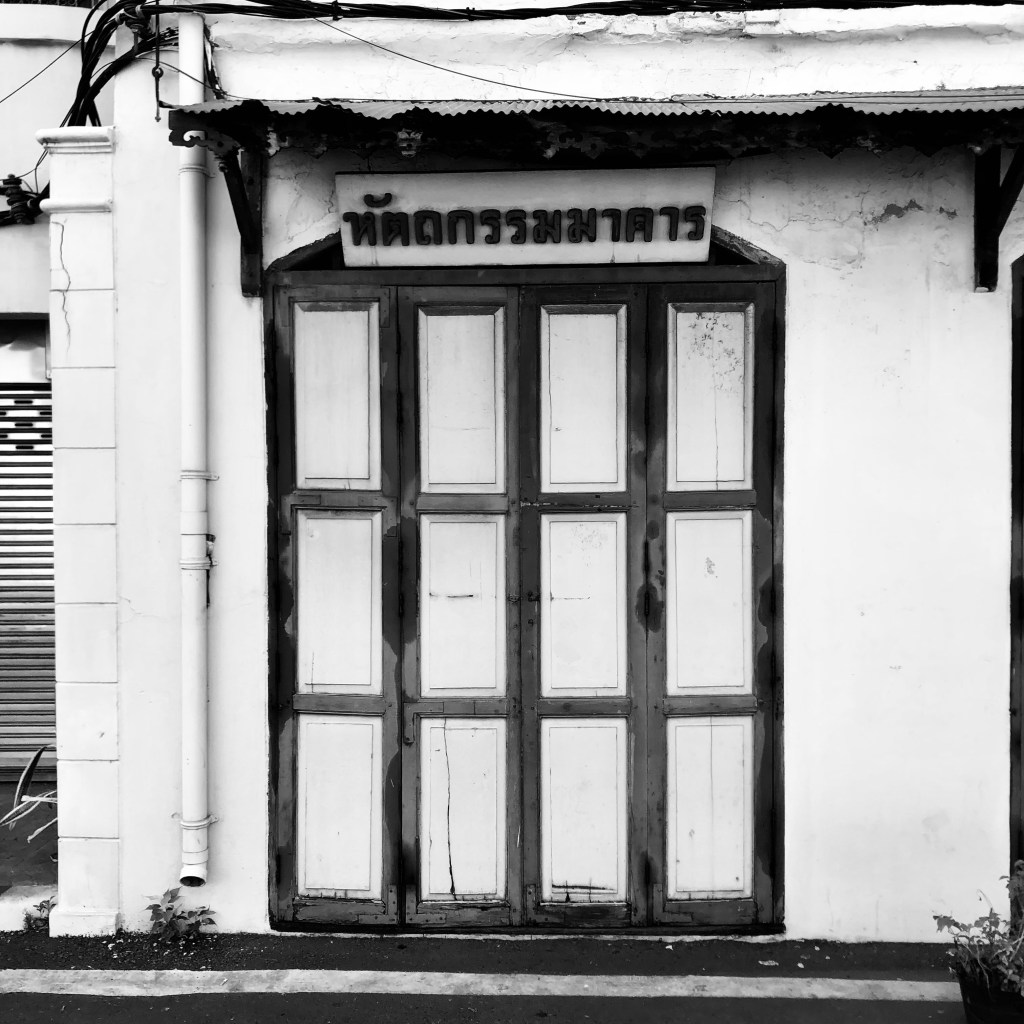
The truth is, hunger wasn’t quite on the tip of our tongues just yet. What greeted us was a tired, unassuming row of shopfronts that did little to whet our appetites. All we could think of was A/C and W/C. Then we were introduced to Khun Suwanit “Toi” Nithipornpisit, the cheery, beaming-eyed, fourth-generation owner of Tek Heng Jeen Lee, whose smile and gift for storytelling banished any cynicism I had brought to the table.
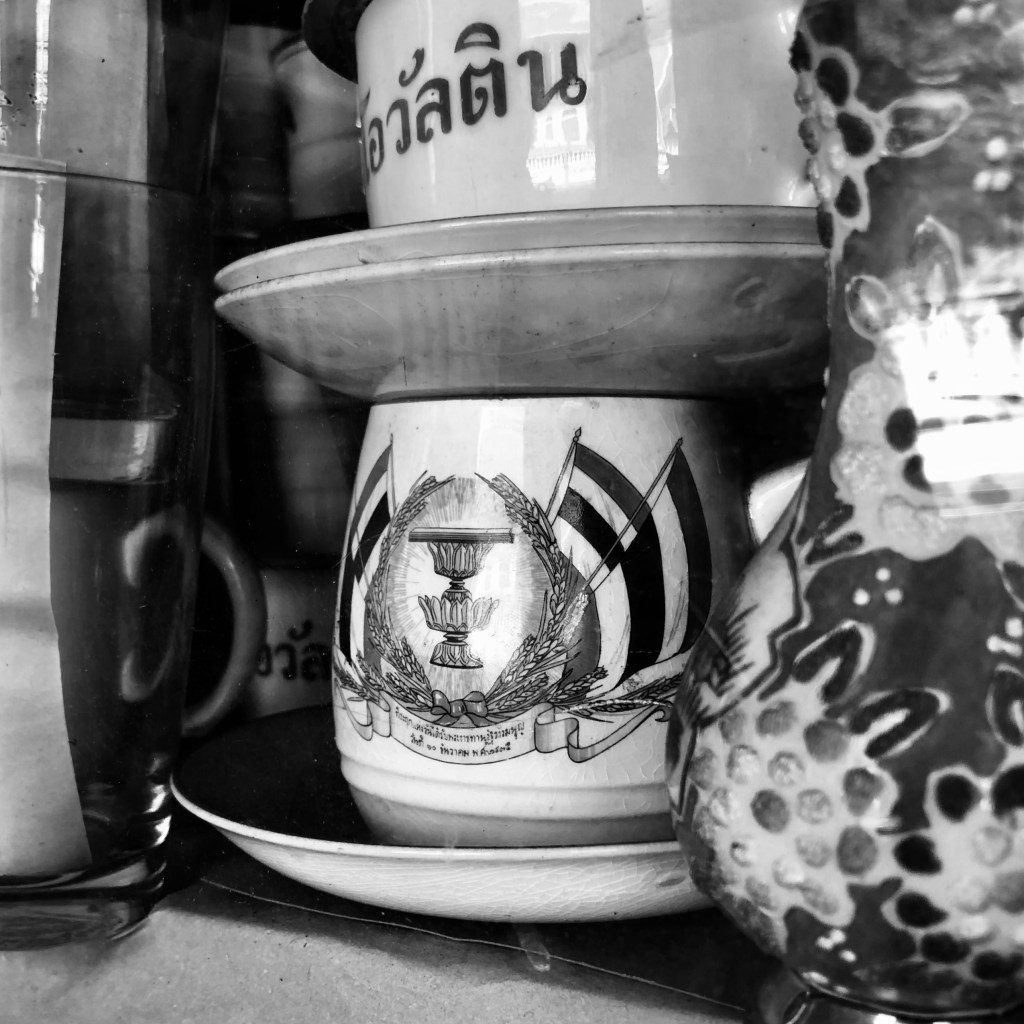
“You know, you arrived just as our most famous patron did over a hundred years ago,” began Khun Toi, her eyes glinting with a mix of pride and nostalgia. By patron, she was referring to King Rama V, Thailand’s much-beloved modernising monarch, a one-time student of the much-inflated Anna Leonowens of “The King and I” fame, or rather, notoriety, in this country. “His Majesty arrived by boat at a time when there were no roads, just canals, houseboats, and betel nut plantations, many of which were owned by the nobility who were members of his inner court. This area, Talat Phlu, was a bustling, watery commercial district, largely populated by Chinese migrants from what is now modern-day Hainan—a settlement that predated Yaowarat.”
“My ancestor Lee used to make Mi Krop by the canal just over there; in those days, it was called Klong Luang—everything was by the canal then. It was done slowly in smaller batches in old copper pans. Even today, Mi Krop is not something that can be rushed. People from that time were more patient than they are today. If you wanted something good, you had to wait,” Khun Toi continued, her voice rich with the cadence of an oft-told family legend. “Mi Krop is at its most fragrant just before it’s finished, and this aroma would attract passersby along the canal, including, one day, King Rama V. He had caught the scent of Lee’s caramelising noodles and was told that ‘the Chinaman Lee’ (Jeen meaning Chinese, although back then he was less politely referred to as Jek) made exceptional Mi Krop.”
In his humility, Lee thought the king and his entourage were simply a group of noblemen—understandable since King Rama V was known to travel incognito to observe his people’s daily lives better. It wasn’t until after several visits that he realised who his distinguished patron truly was. You can imagine the shock for someone like my ancestor Lee. Eventually, he was invited to prepare his Mi Krop within the palace. Later, the King bestowed a name upon Lee’s creation—Mi Krop Savoey Sawan—declaring that Lee’s recipe should be passed down to future generations. And here we are today, still honouring my ancestor and King Rama V’s wish.”
And the rest, as they say, is history.
Thai, as a language, can be wonderfully poetic when it isn’t being literal—take Mi Krop, for example: Crispy Noodles. Savoey Sawan, loosely translated, means “to dine heavenly.” As a man of words, I was sold. By royal command, this humble canal-side confection had been elevated in name to something brushing against the celestial. Once the seed of imagination is planted, there’s no going back. By the time Jeen Lee’s Mi Krop Savoey Sawan arrived at our table, we had all been seduced. We were not disappointed.
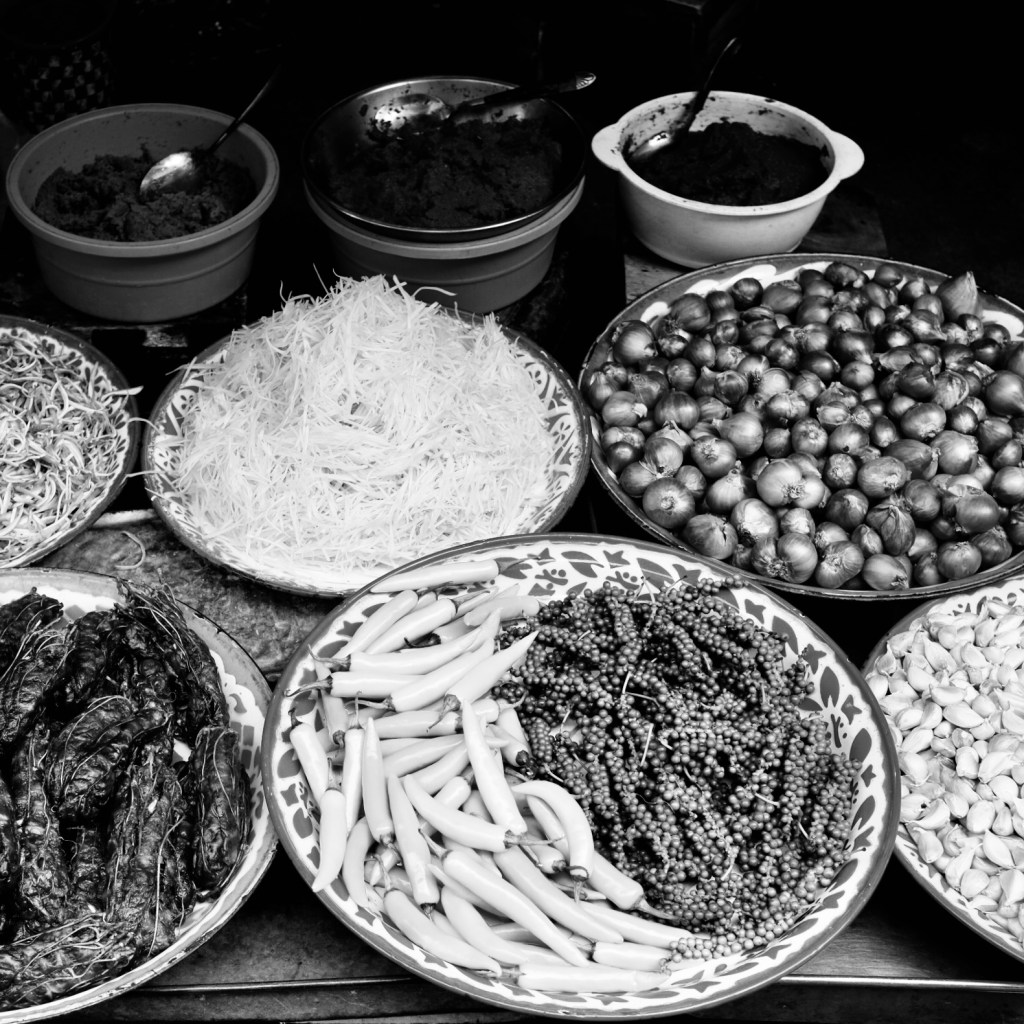
Jeen Lee’s Mi Krop isn’t just a tale spun in sepia tones; its distinct flavour is very much here and now. The technique employed by Khun Toi’s sister, Khun Tui, who oversees the kitchen, in delicately crisping the noodles (added to cold oil) results in a dish less nest-like and more akin to deeply golden, pillowy piles of hay, well-drained of its oily bath. Caught within its sticky tangle are plump shrimp, glistening shreds of egg, and earthy garlic chives scattered like emerald batons alongside pearlescent pickled Thai garlic, sprinkled with a healthy pinch of heritage passed down over generations. Sweet, salty, and savoury notes are equally pronounced here, enhanced by the addition of more cilantro, chopped rings of mild red and green Chee Fah chillies, bean sprouts, a spritz of lime, and the finely diced flesh of Som Saa (Thai bitter orange).
Heavenly.
That’s the power of storytelling. In truth, it doesn’t matter whether your steak was serenaded by angelic choirs or your salad leaves were individually named and blessed by a Tibetan monk. It’s the story behind the bite that lodges in the cortex, turning a meal into a moment. Our taste buds are shockingly promiscuous—they’re easily wooed by the romance of a well-told tale. I would argue, somewhat rebelliously, that the story trumps quality and ingredients in the hierarchy of what makes food memorable because it is the story, not the taste, that lives on.
Our taste buds are shockingly promiscuous—they’re easily wooed by the romance of a well-told tale. I would argue, somewhat rebelliously, that the story trumps quality and ingredients in the hierarchy of what makes food memorable because it is the story, not the taste, that lives on.
Jeen Lee’s Mi Krop Savoey Sawan now resides in the attic of my mind. His Mi Krop is now mine as well, and his story, as retold by Khun Toi, is sewn into the fabric of my food memory. It’s the tale my subconscious has on repeat whenever I eat Mi Krop, and it’s the tale I’m telling you now—of a dish that has travelled through time, carrying with it a family’s legacy and the ineffable magic that turns taste into a story worth retelling.
Author’s Note: It has been many years since my first visit to Tek Heng Jeen Lee, but rest assured, Mi Krop Savoey Sawan is still on the menu, though most locals simply call it Mi Krop Rama V. The restaurant is no longer tired-looking. Far from it, thanks in no small part to the enchantment spun by Khun Toi’s storytelling. She is still there, weaving her unpretentious magic, and so is her sister, conjuring her culinary alchemy in the kitchen, as are other family members, now in their fifth generation.
Tek Heng Jeen Lee (เต็กเฮงจีนหลี่)
326-330, Talat Phlu, Thon Buri, Bangkok 10600
+66 (0) 894881538
Read Next:
The Footpath Files
Stories from the streets of Bangkok—one footnote at a time.
Proudly powered by WordPress














 The Footpath Files
Leave a comment