
In the shadow of Bangkok’s most ambitious megaproject, a green-and-white anomaly lingers. Painstakingly resurrected from memory, Wireless House threads a forgotten past into the city’s relentless march forward—quietly reminding us that even amidst soaring ambition, history still has a place.
Bangkok doesn’t grow—it surges. From my apartment window, I’ve watched cranes sprout like mushrooms after the rain, their steel arms slicing the horizon as skyscrapers rise faster than thoughts can form. But nothing captures this city’s insatiable momentum quite like One Bangkok. Even its name feels almost self-effacing for a project this vast: nine towers, synchronised in their ambition, reshaping the skyline with every polished pane of glass. Through the pandemic—when the world held its breath—this megaproject charged forward, its ascent powered by the kind of unflinching financial confidence emblematic of one of Thailand’s largest conglomerates, TCC Group.
Unsurprisingly, roads were redrawn, expressway access carved into being, and somewhere along the way, the map of Bangkok began to tilt. The city’s centre of gravity quietly but unmistakably recalibrated, shifting its orbit to this colossal “city-within-a-city.” It’s a vision of unrestrained progress: immense in scale, unapologetically forward-looking.
And yet, improbably, anchoring this cathedral of commerce and aspiration sits Wireless House: a green-and-white anomaly, as if delicately tinted from a daguerreotype and willed into the shadow of One Bangkok’s skyscrapers. This diminutive gingerbread house—seemingly frozen in time, much like the wistful opening scene of Up brought to life—carries a bittersweet dignity. It feels as though it should house a cantankerous old man, railing against the towers closing in around it. But there’s no such defiance here. Instead, Wireless House embodies a quiet irony, or perhaps a mirage in concrete: the house is no older than the skyline it anchors.
Its resurrection is something of a reversal of fortune for a long-forgotten—and long-vanished—relic. Inaugurated 111 years ago as the Saladaeng Radiotelegraph Station, it gave the area its enduring association with wireless communication, even lending its legacy to the road that would later be renamed Wireless Road. This station marked the beginning of Bangkok’s trajectory toward modernity and, eventually, the information superhighway. What had been erased from memory has been given the Lazarus touch—revived with uncanny precision. But Wireless House isn’t here to defy the future; it’s here to recall—to quietly remind a city charging forward of a significant spark that set it all in motion.
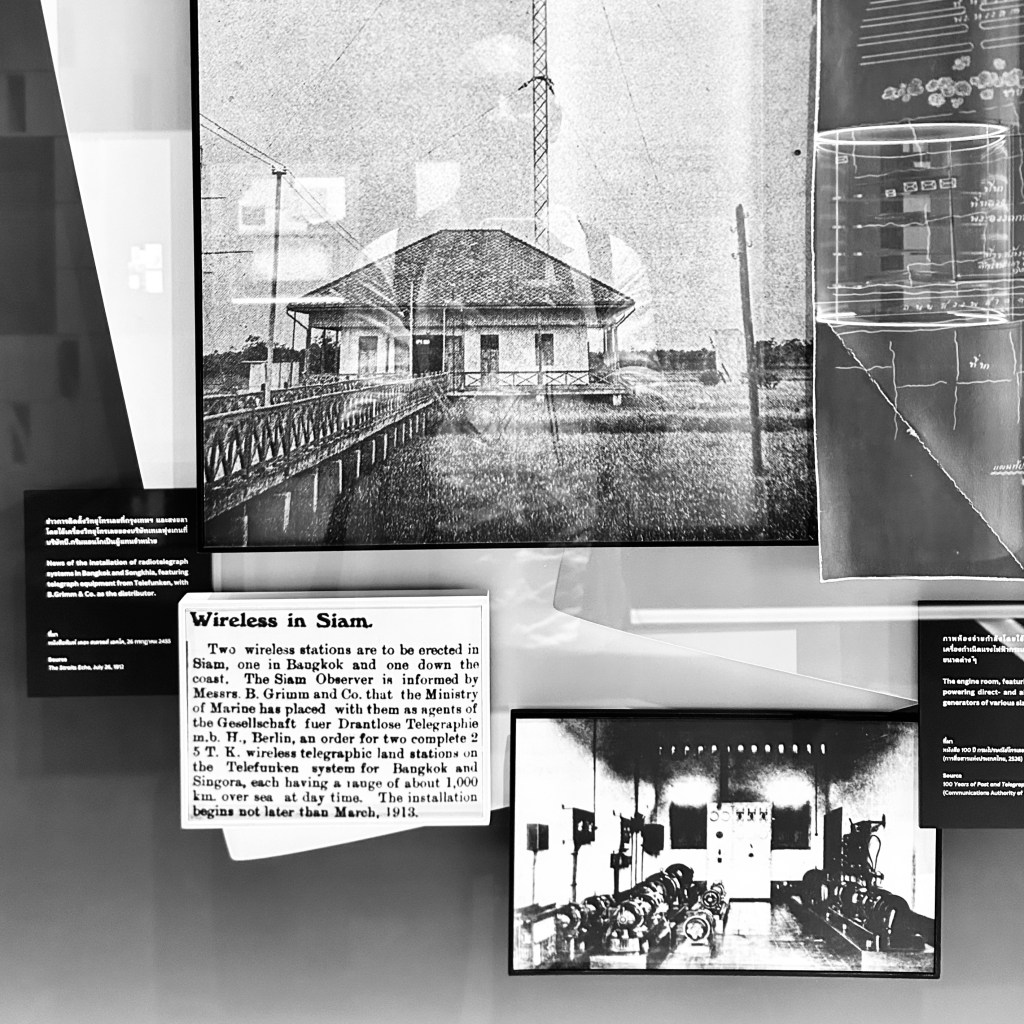
And what a spark it was. Over a century ago, this plot of land was a vast expanse of rice paddies known as Tung Saladaeng, so far out of town it barely registered on a map. Its remoteness made it the ideal site for Thailand’s first wireless telegraph operation—the Saladaeng Radiotelegraph Station—a technological milestone for a nation taking its first steps toward global connectivity. The location wasn’t a compromise; it was strategic. Open fields ensured minimal interference with the fragile radio waves that promised to revolutionise long-distance communication, a necessity for the Navy’s operations and a leap forward in national infrastructure.
Its resurrection is something of a reversal of fortune for a long-forgotten—and long-vanished—relic. Inaugurated 111 years ago as the Saladaeng Radiotelegraph Station, it gave the area its enduring association with wireless communication, even lending its legacy to the road that would later be renamed Wireless Road. This station marked the beginning of Bangkok’s trajectory toward modernity and, eventually, the information superhighway.
You don’t need much imagination to picture the scene—it greets you as you enter Wireless House, frozen in grainy black-and-white. The Saladaeng Radiotelegraph Station perched on its raised platform, a modest structure quietly surveying the endless rice paddies like a lone sentinel of modernity. Beside it, an improbably regal pavilion, with its theatrical ornateness, appears to vie for attention—a ceremonial stage set against the rural backdrop. But it’s the towering mast behind them both—a stripped-down Eiffel Tower in aesthetics if not ambition—that commands the frame, punctuating the horizon with an audacious exclamation point. Look closer: there’s King Rama VI and his retinue, crisply dressed in white—a cluster of formality dwarfed by the soaring mast. It was here, during a moment steeped in ceremony, that the Saladaeng Radiotelegraph Station began its pivotal role in bridging the nearly 1,000 kilometres between Bangkok and Songkhla, marking the dawn of Thailand’s wireless communication era.

The station’s impact was immediate—so much so that Sapphasat Road, which it bordered, was rechristened Wireless Road, a name honouring its role in pioneering ‘wireless’ communication. More than just a technical milestone, it signalled modernity breaking through in a landscape still tethered—quite literally—to the rhythms of an agrarian world.
Resurrecting Wireless House wasn’t an indulgence in architectural nostalgia; it was a deliberate statement. The original Saladaeng Radiotelegraph Station, inaugurated in 1914, was a cornerstone of Thailand’s early communication infrastructure. Its role, however, was short-lived. Within a decade, its operations were moved to a new building elsewhere on the site, which served as the station’s successor. Over time, as the technology evolved and priorities shifted, the station was gradually rendered obsolete. The site’s transformation began in earnest: first as the home of the Old Cadet Academy, a military institution that occupied the grounds for over 40 years, before being repurposed in 2001 as Suan Lum Night Bazaar, a sprawling night market that for a decade, drew crowds for its open-air stalls and late-night charms. By the time plans for One Bangkok emerged, the site was a palimpsest of the city’s layered history—a place where the past had been built over so many times it was barely visible.
And yet, despite the station’s long physical absence, its historical importance refused to fade. Designated a national historical site by the Fine Arts Department, the land—owned by the Crown Property Bureau—carried a weight that couldn’t simply be brushed aside. For a project as audacious as One Bangkok, where skyscrapers seem to stretch endlessly skyward, a nod to history wasn’t just an obligation; it was a chance to create depth. Wireless House became the linchpin of that vision—a tangible connection between the city’s restless future and its often-overlooked past.
The house’s resurrection was anything but straightforward. Archaeologist Kasama Kaosaiyanont, leading the excavation of the original site, sifted through decades of urban upheaval to unearth what remained of the Saladaeng Radiotelegraph Station. Her team’s discoveries—glass insulators, fragments of porcelain, and the crumbled base of the once-soaring radio mast—laid the foundation for what came next. Conservation architect Watanyoo Thephuttee, tasked with reconstructing the house, took on the challenge with meticulous care. Guided by archival photographs, every detail was considered—from the texture of the wood to the carved shutters—to ensure the result was faithful to the past without lapsing into lifeless replication.
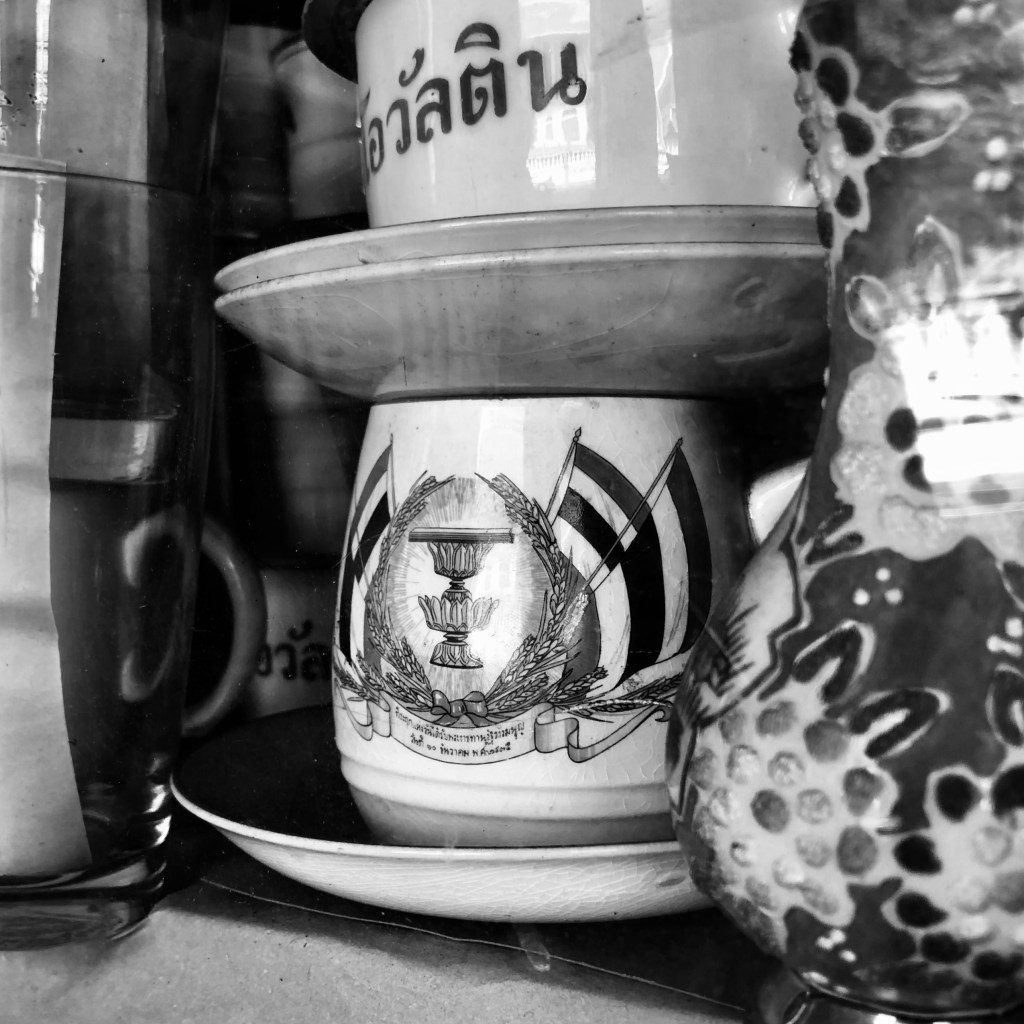
Of course, rebuilding was never going to be seamless. The site had been churned over and repurposed so many times it offered little clarity—just fragments waiting to be pieced together. For Kasama and Watanyoo, this wasn’t just about restoring a building; it was about reconstructing lives. The objects they unearthed weren’t grand declarations of history but the quieter, human detritus of the people who passed through this place: those who worked, waited, gambled, ate, and left traces of themselves in the soil. These fragments now live inside the house, anchoring its pristine reconstruction in something far messier and far more real.
The objects they unearthed weren’t grand declarations of history but the quieter, human detritus of the people who passed through this place: those who worked, waited, gambled, ate, and left traces of themselves in the soil. These fragments now live inside the house, anchoring its pristine reconstruction in something far messier and far more real.
Today, stepping into Wireless House is like stepping into a world straddling two eras. The air hums with the faint, rhythmic tapping of Morse code—a deliberate thread connecting the present to the station’s past. It’s bygone pulse filling the room with the soundtrack of a time when messages travelled as carefully measured dots and dashes, each pause an act of precision. The sound doesn’t overwhelm; it reverberates softly, layering the space with an echo of purpose and invention.

And it’s these echoes—small, unassuming, and quietly persistent—that hit hardest in the Wall of Artefacts. A luminous grid of glass squares stretches along one wall, each containing a fragment of lives once lived here: a shard of porcelain, a cracked Yardley hair oil jar, a Police Cadet’s scuffed wallet. These objects don’t shout for attention—they wait for it, drawing you in, daring you to look closer. They’re not curated for their beauty or rarity, but for their intimacy. Each is a humble relic of the mundane: the indulgences, routines, and oddities that quietly wove the fabric of daily life.
For all its meticulous restoration, Wireless House gleams with the deliberate polish of the present. The artefacts, though, refuse to conform to that neatness. A gambling tile from Yia Lee, stamped with “half-seven fang,” speaks not of duty but of stolen hours and quiet bets. The Bovril jar, stout and practical, suggests sustenance snatched between shifts—a taste of somewhere far away. And the Cleopatra powdered water bottle hints at an indulgence savoured against the monotony of routine. Together, they resist the gloss of history books, reminding you that the past isn’t always heroic or tragic. Often, it’s found in the chipped, the cracked, and the quietly enduring.
Step closer to the Wall of Artefacts, and its quiet insistence draws you in. These objects quietly insist on lives lived at the edges—small, personal moments that slip past grand narratives but nevertheless leave lasting marks. A cracked jar, a worn coin, a fragment of porcelain—each one feels like a thread pulled from the fabric of history, frayed but enduring. These objects don’t emit sounds or stories, but they carry an almost physical sense of presence—a tactile reminder of the hands that touched them. Together, they create a mosaic of memory and humanity that have somehow survived the churn of time—anchoring it in the imperfect, the human, the real.
Walk around One Bangkok today, and you find yourself in a city on the cusp of the future—still assembling itself, but already brimming with possibility. Its vast plazas are beginning to hum, its shops quietly filling, and soon, the city’s most expensive residences will open their doors to those who can afford its lofty promises. Whether TCC Group’s grand gamble will deliver on its vision—or give back in ways that truly enrich the lives of Bangkokians—is still an open question. But what makes this titanic leap into modernity truly compelling isn’t its scale or its spectacle. It’s the tether to something smaller, quieter, and unexpectedly human: Wireless House.
During my visit, I noticed an elderly man sitting cross-legged on the polished floor, his gaze fixed on a flickering screen recounting the history of this site. His voice, low and steady, drifted across the room as he spoke to a docent, recalling the cadet school that once stood here—how he had been a cadet himself—and the stories his father had shared of rice paddies stretching across this land, long before the city’s rise. He spoke of Lumpini Park just across the road, where his parents once danced—a memory as tied to this plot as the Saladaeng Radiotelegraph Station itself.
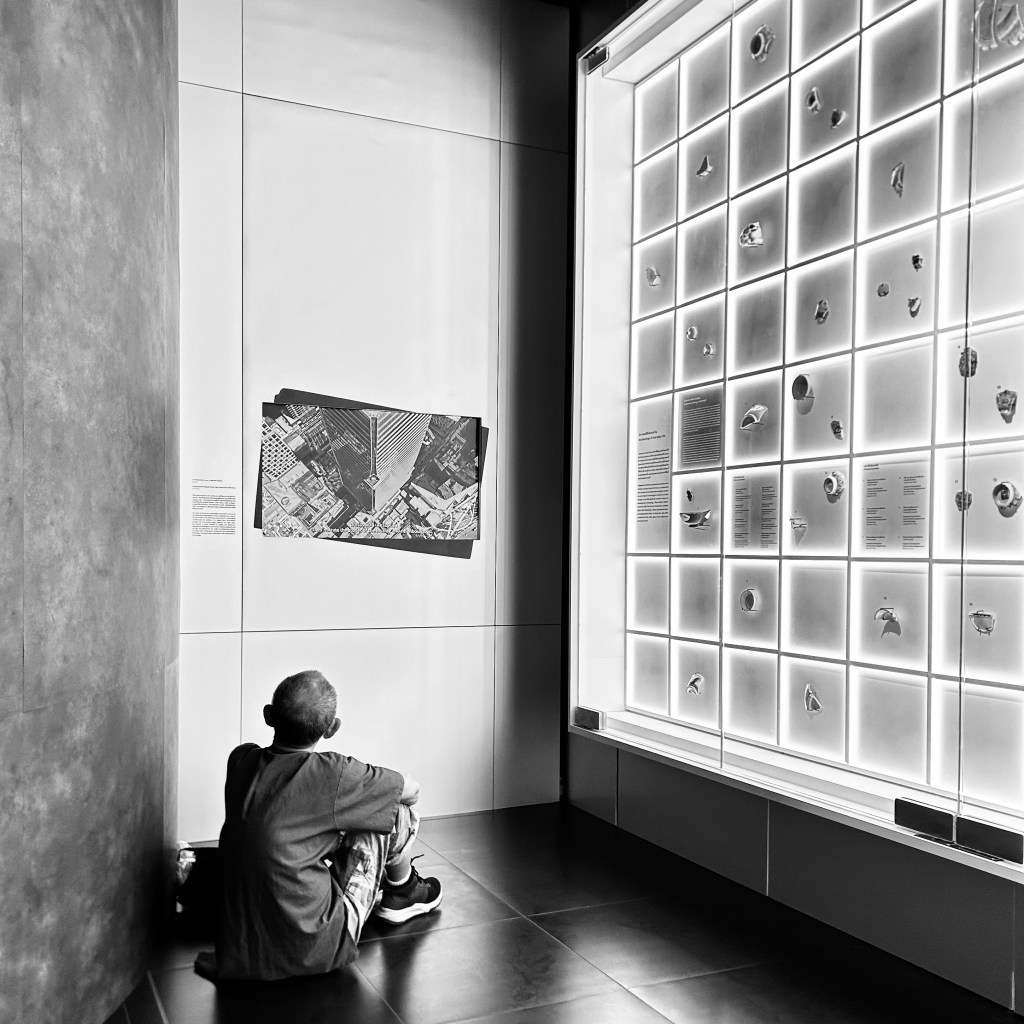
In that moment, the past didn’t feel distant or sealed behind glass. It wasn’t just a story in photographs or a footnote on a plaque—it lived, as real and tangible as the ground beneath his feet. Wireless House, resurrected from history, resonates not because of its meticulous restoration but because of the fragile, human connections it seems to carry forward.
And this, perhaps, is what Wireless House achieves most brilliantly: it transforms history from something distant and abstract into something deeply personal—a rare chance to remember, to reflect, and to hold onto a vanished past that might otherwise slip away unnoticed.
Bangkok isn’t alone in grappling with this tension—Tokyo, Shanghai, Singapore all face the same push-pull of preservation and progress. But for a megaproject so synonymous with the city’s future, it’s telling that its story begins with a deliberate nod to a past many had long forgotten. At its core, Wireless House suggests something profound: the city’s relentless march forward gains meaning only when it carries its history along. In the luminous wall of artefacts, in the grainy photographs, and in the quiet presence of an elderly man who has lived through it all, Wireless House offers its most profound statement: progress isn’t progress unless it has perspective.
One Bangkok – 1 Witthayu Rd, Lumphini, Pathum Wan, Bangkok 10330
+66 (0)2 254 6466
The Footpath Files
Stories from the streets of Bangkok—one footnote at a time.
Proudly powered by WordPress






 The Footpath Files
Leave a comment